

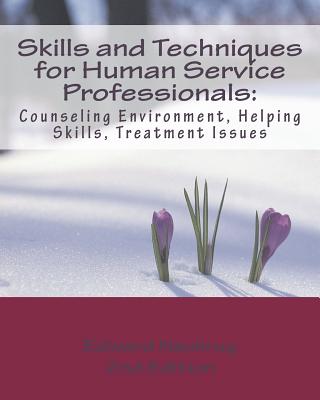
Skills and Techniques for Human Service Professionals
Description
Skills and Techniques for Human Service Professionals provides helpers with important knowledge in three areas: The counseling environment, helping skills, and treatment issues. SECTION I: THE COUNSELING ENVIRONMENT (Chapters 1-3) 1) Characteristics of the Effective Helper, highlights eight characteristics of the effective helper, including empathy, genuineness, acceptance, cognitive complexity, wellness, competence, cultural sensitivity, and developing your "it factor." 2) Entering the Agency, reviews agencies should respond to phone calls and emails, the atmosphere created by support staff and surroundings, whether helpers have embraced characteristics of the effective helper, the comfort level of the helper's office, and nonverbal behaviors of helpers, such as attire, eye contact, body positioning and facial expressions, personal space, touch, voice intonation, and tone of voice. SECTION II: HELPING SKILLS (Chapters 3-7) 3) Foundational Skills, presents skills or attitudes that helpers should provide early in the relationship including honoring and respecting the client, being curious, delimiting power and developing an equal relationship, non-pathologizing the client, and demonstrating the 3 C's: being committed, caring, and courteous. 4) Essential Skills, are core skills used in any helping relationship and often initiate movement toward goal identification and even goal achievement. They include silence and pause time, listening skills, reflecting feelings and content, paraphrasing, and basic empathy. 5) Commonly Used Skills, presents skills often exhibited by helpers, and include affirmation giving, encouragement, and support; offering alternatives, information giving, and advice giving; modeling; self-disclosure; collaboration; and advocacy. 6) Information Gathering and Solution-Focused Questions, distinguishes between information gathering skills, such as open questions, closed questions, tentative questions, and why questions; and solution-focused questions, such as preferred goals questions, evaluative questions, coping questions, exception-seeking questions, and solution-oriented questions. 7) Advanced and Specialized Training, examines advanced empathy; confrontation: challenge with support; interpretation; cognitive-behavioral responses; and specialized training skills in the areas of assessment for lethality: suicidality and homicidality; crisis, disaster, and trauma helping; token economies; positive helping; and coaching. SECTION III: TREATMENT ISSUES (Chapters 8-10) 8) Case Management, reviews issues related to informed consent and professional disclosure statements; assessment for treatment planning; monitoring medications; monitoring progress; writing case notes; ensuring security and confidentiality of records; documenting contact hours; making referrals; conducting follow-up; and practicing time management. 9) Multicultural Counseling, examines how to become culturally competent. It offers eight reasons why counseling has not been helpful for some, identifies definitions and models of culturally competent helping, and examines strategies for working with different ethnic and racial groups; people from diverse religious backgrounds; women; men; lesbians, gays, bisexuals, and transgender individuals; the homeless and the poor; older persons; individuals with mental illness; individuals with disabilities; and substance users and abusers. 10) Ethical Issues and Ethical Decision-Making examines ethical codes, reviews four ethical decision-making models, and presents ethical issues related to informed consent, competence and scope of knowledge, supervision, confidentiality, privileged communication, dual and multiple relationships, sexual relationships with clients, where the helper's primary obligation lies, continuing education, multicultural counseling, and values in the helping relationship. Ethical vignettes are presented.
Skills and Techniques for Human Service Professionals (ISBN-13: 9780692742686), written by Edward Neukrug, was published by Counseling Books Etc. in 2016-09-18. The Skills and Techniques for Human Service Professionals textbook is widely used in colleges and universities across the country. You can rent or buy Skills and Techniques for Human Service Professionals from Valore, along with many other new and used textbooks. Valore provides affordable textbooks, trusted sellers, and fast delivery to help you succeed in your studies.
Available until 02/08/2027
Available until 03/15/2027
Noticeable wear; fully readable
Average wear; may have highlights
 Free Standard Shipping on orders of physical books over $35.00

Description
Skills and Techniques for Human Service Professionals provides helpers with important knowledge in three areas: The counseling environment, helping skills, and treatment issues. SECTION I: THE COUNSELING ENVIRONMENT (Chapters 1-3) 1) Characteristics of the Effective Helper, highlights eight characteristics of the effective helper, including empathy, genuineness, acceptance, cognitive complexity, wellness, competence, cultural sensitivity, and developing your "it factor." 2) Entering the Agency, reviews agencies should respond to phone calls and emails, the atmosphere created by support staff and surroundings, whether helpers have embraced characteristics of the effective helper, the comfort level of the helper's office, and nonverbal behaviors of helpers, such as attire, eye contact, body positioning and facial expressions, personal space, touch, voice intonation, and tone of voice. SECTION II: HELPING SKILLS (Chapters 3-7) 3) Foundational Skills, presents skills or attitudes that helpers should provide early in the relationship including honoring and respecting the client, being curious, delimiting power and developing an equal relationship, non-pathologizing the client, and demonstrating the 3 C's: being committed, caring, and courteous. 4) Essential Skills, are core skills used in any helping relationship and often initiate movement toward goal identification and even goal achievement. They include silence and pause time, listening skills, reflecting feelings and content, paraphrasing, and basic empathy. 5) Commonly Used Skills, presents skills often exhibited by helpers, and include affirmation giving, encouragement, and support; offering alternatives, information giving, and advice giving; modeling; self-disclosure; collaboration; and advocacy. 6) Information Gathering and Solution-Focused Questions, distinguishes between information gathering skills, such as open questions, closed questions, tentative questions, and why questions; and solution-focused questions, such as preferred goals questions, evaluative questions, coping questions, exception-seeking questions, and solution-oriented questions. 7) Advanced and Specialized Training, examines advanced empathy; confrontation: challenge with support; interpretation; cognitive-behavioral responses; and specialized training skills in the areas of assessment for lethality: suicidality and homicidality; crisis, disaster, and trauma helping; token economies; positive helping; and coaching. SECTION III: TREATMENT ISSUES (Chapters 8-10) 8) Case Management, reviews issues related to informed consent and professional disclosure statements; assessment for treatment planning; monitoring medications; monitoring progress; writing case notes; ensuring security and confidentiality of records; documenting contact hours; making referrals; conducting follow-up; and practicing time management. 9) Multicultural Counseling, examines how to become culturally competent. It offers eight reasons why counseling has not been helpful for some, identifies definitions and models of culturally competent helping, and examines strategies for working with different ethnic and racial groups; people from diverse religious backgrounds; women; men; lesbians, gays, bisexuals, and transgender individuals; the homeless and the poor; older persons; individuals with mental illness; individuals with disabilities; and substance users and abusers. 10) Ethical Issues and Ethical Decision-Making examines ethical codes, reviews four ethical decision-making models, and presents ethical issues related to informed consent, competence and scope of knowledge, supervision, confidentiality, privileged communication, dual and multiple relationships, sexual relationships with clients, where the helper's primary obligation lies, continuing education, multicultural counseling, and values in the helping relationship. Ethical vignettes are presented.
Skills and Techniques for Human Service Professionals (ISBN-13: 9780692742686), written by Edward Neukrug, was published by Counseling Books Etc. in 2016-09-18. The Skills and Techniques for Human Service Professionals textbook is widely used in colleges and universities across the country. You can rent or buy Skills and Techniques for Human Service Professionals from Valore, along with many other new and used textbooks. Valore provides affordable textbooks, trusted sellers, and fast delivery to help you succeed in your studies.
Frequently Asked Questions
The most affordable way to get Skills and Techniques for Human Service Professionals by Edward Neukrug is usually renting. We offer flexible rental periods, as well as options to buy it used or new at a discount. Check the pricing table above for the current lowest price.
Used books and rentals do not guarantee an active access code. If your professor requires a platform like Connect, MindTap, or MyLab for homework, you may need to purchase an access code separately.
We know the syllabus moves fast! Standard shipping usually takes 3-5 business days, but we offer expedited shipping options at checkout so you can get Skills and Techniques for Human Service Professionals before your first major assignment.
You can rent Skills and Techniques for Human Service Professionals (9780692742686) for a standard 125-day semester term or a 90-day quarter term, with options to extend your rental. You just need to return it by the due date listed on your order.
Yes! We have a textbook buyback program. If you purchase the physical copy of Skills and Techniques for Human Service Professionals, you can enter your ISBN (9780692742686) into our sell back page at the end of the term to see the current offer, print a shipping label, and get paid. Just make sure to check out our sell back condition guide first so you know what we accept!
We understand schedule changes happen. You can return Skills and Techniques for Human Service Professionals for a refund within 14 days after the delivery of your item, provided it is in the same condition it was sent in. See our return policy for more information.
Yes! If your professor only requires the online homework platform (like Connect, MindTap, or MyLab), you can purchase a standalone access code for Skills and Techniques for Human Service Professionals without buying a physical book, provided we currently have the standalone code in stock.