

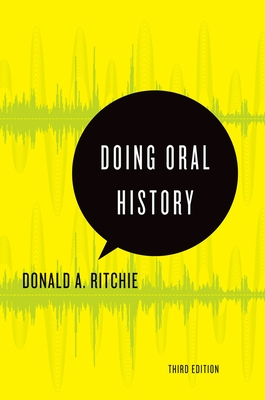
Doing Oral History
Description
Doing Oral History is considered the premier guidebook to oral history, used by professional oral historians, public historians, archivists, and genealogists as a core text in college courses and throughout the public history community. Over the past decades, the development of digital audio and video recording technology has continued to alter the practice of oral history, making it even easier to produce quality recordings and to disseminate them on the Internet. This basic manual offers detailed advice on setting up an oral history project, conducting interviews, making video recordings, preserving oral history collections in archives and libraries, and teaching and presenting oral history.
Using the existing Q&A format, the third edition asks new questions and augments previous answers with new material, particularly in these areas:
1. Technology: As before, the book avoids recommending specific equipment, but weighs the merits of the types of technology available for audio and video recording, transcription, preservation, and dissemination. Information about web sites is expanded, and more discussion is provided about how other oral history projects have posted their interviews online.
2. Teaching: The new edition addresses the use of oral history in online teaching. It also expands the discussion of Institutional Review Boards (IRBs) with the latest information about compliance issues.
3. Presentation: Once interviews have been conducted, there are many opportunities for creative presentation. There is much new material available on innovative forms of presentation developed over the last decade, including interpretive dance and other public performances.
4. Legal considerations: The recent Boston College case, in which the courts have ruled that Irish police should have access to sealed oral history transcripts, has re-focused attention on the problems of protecting donor restrictions. The new edition offers case studies from the past decade.
5. Theory and Memory: As a beginner's manual, Doing Oral History has not dealt extensively with theoretical issues, on the grounds that these emerge best from practice. But the third edition includes the latest thinking about memory and provides a sample of some of the theoretical issues surrounding oral sources. It will include examples of increased studies into catastrophe and trauma, and the special considerations these have generated for interviewers.
6. Internationalism: Perhaps the biggest development in the past decade has been the spreading of oral history around the world, facilitated in part by the International Oral History Association. New oral history projects have developed in areas that have undergone social and political upheavals, where the traditional archives reflect the old regimes, particularly in Eastern Europe, the Middle East, Asia, Africa, and Latin America. The third edition includes many more references to non-U.S. projects that will still be relevant to an American audience.
These changes make the third edition of Doing Oral History an even more useful tool for beginners, teachers, archivists, and all those oral history managers who have inherited older collections that must be converted to the latest technology
Doing Oral History, 3 Edition (ISBN-13: 9780199329335), written by Donald A Ritchie, was published by Oxford University Press, USA in 2014-10-17. The Doing Oral History, 3 Edition textbook is widely used in colleges and universities across the country. You can rent or buy Doing Oral History from Valore, along with many other new and used textbooks. Valore provides affordable textbooks, trusted sellers, and fast delivery to help you succeed in your studies.
Available until 02/09/2027
Available until 03/16/2027
Average wear; may have highlights
 Free Standard Shipping on orders of physical books over $35.00

Description
Doing Oral History is considered the premier guidebook to oral history, used by professional oral historians, public historians, archivists, and genealogists as a core text in college courses and throughout the public history community. Over the past decades, the development of digital audio and video recording technology has continued to alter the practice of oral history, making it even easier to produce quality recordings and to disseminate them on the Internet. This basic manual offers detailed advice on setting up an oral history project, conducting interviews, making video recordings, preserving oral history collections in archives and libraries, and teaching and presenting oral history.
Using the existing Q&A format, the third edition asks new questions and augments previous answers with new material, particularly in these areas:
1. Technology: As before, the book avoids recommending specific equipment, but weighs the merits of the types of technology available for audio and video recording, transcription, preservation, and dissemination. Information about web sites is expanded, and more discussion is provided about how other oral history projects have posted their interviews online.
2. Teaching: The new edition addresses the use of oral history in online teaching. It also expands the discussion of Institutional Review Boards (IRBs) with the latest information about compliance issues.
3. Presentation: Once interviews have been conducted, there are many opportunities for creative presentation. There is much new material available on innovative forms of presentation developed over the last decade, including interpretive dance and other public performances.
4. Legal considerations: The recent Boston College case, in which the courts have ruled that Irish police should have access to sealed oral history transcripts, has re-focused attention on the problems of protecting donor restrictions. The new edition offers case studies from the past decade.
5. Theory and Memory: As a beginner's manual, Doing Oral History has not dealt extensively with theoretical issues, on the grounds that these emerge best from practice. But the third edition includes the latest thinking about memory and provides a sample of some of the theoretical issues surrounding oral sources. It will include examples of increased studies into catastrophe and trauma, and the special considerations these have generated for interviewers.
6. Internationalism: Perhaps the biggest development in the past decade has been the spreading of oral history around the world, facilitated in part by the International Oral History Association. New oral history projects have developed in areas that have undergone social and political upheavals, where the traditional archives reflect the old regimes, particularly in Eastern Europe, the Middle East, Asia, Africa, and Latin America. The third edition includes many more references to non-U.S. projects that will still be relevant to an American audience.
These changes make the third edition of Doing Oral History an even more useful tool for beginners, teachers, archivists, and all those oral history managers who have inherited older collections that must be converted to the latest technology
Doing Oral History, 3 Edition (ISBN-13: 9780199329335), written by Donald A Ritchie, was published by Oxford University Press, USA in 2014-10-17. The Doing Oral History, 3 Edition textbook is widely used in colleges and universities across the country. You can rent or buy Doing Oral History from Valore, along with many other new and used textbooks. Valore provides affordable textbooks, trusted sellers, and fast delivery to help you succeed in your studies.
Frequently Asked Questions
The most affordable way to get Doing Oral History 3 by Donald A Ritchie is usually renting. We offer flexible rental periods, as well as options to buy it used or new at a discount. Check the pricing table above for the current lowest price.
Used books and rentals do not guarantee an active access code. If your professor requires a platform like Connect, MindTap, or MyLab for homework, you may need to purchase an access code separately.
We know the syllabus moves fast! Standard shipping usually takes 3-5 business days, but we offer expedited shipping options at checkout so you can get Doing Oral History before your first major assignment.
You can rent Doing Oral History (9780199329335) for a standard 125-day semester term or a 90-day quarter term, with options to extend your rental. You just need to return it by the due date listed on your order.
Yes! We have a textbook buyback program. If you purchase the physical copy of Doing Oral History, you can enter your ISBN (9780199329335) into our sell back page at the end of the term to see the current offer, print a shipping label, and get paid. Just make sure to check out our sell back condition guide first so you know what we accept!
We understand schedule changes happen. You can return Doing Oral History for a refund within 14 days after the delivery of your item, provided it is in the same condition it was sent in. See our return policy for more information.
Yes! If your professor only requires the online homework platform (like Connect, MindTap, or MyLab), you can purchase a standalone access code for Doing Oral History without buying a physical book, provided we currently have the standalone code in stock.